There is a popular saying in Mandarin that goes “讀萬卷書不如行萬里路” which literally translates to English as: Ten thousand scrolls of knowledge cannot rival ten thousand miles of journey. In other words, who we are as an individual – our personality, values and worldview – is greatly influenced by what we learn throughout our lifetime, and it constantly evolves too as we know more. Yet as much as there is an ocean of knowledge in books ready to be acquired by us, the experience we feel along the way also plays a crucial role in shaping our character. In fact, these experiences are sometimes so profoundly powerful that they leave a lasting impact that will completely and fundamentally change us from the inside. For the astronauts who have been to space in their lifetime, one such inner-self-shaping experience is known as The Overview Effect.
What is The Overview Effect?
The Overview Effect is a term coined by the American writer and researcher Frank White. In his book The Overview Effect: Space Exploration and Human Evolution, White uses this term to describe a cognitive shift in awareness reported by some astronauts and cosmonauts during spaceflight, often while viewing the Earth from orbit, in transit between the Earth and the moon, or from the lunar surface. It is a reaction, a reflection and a response to the experience of seeing the Earth from a cosmic point of view, encapsulating the apparent facts that Earth is a sphere suspended in the vastness of space, and upon Earth, harbours the humanity we came from. This view of the Earth from space leads to a sudden realisation of reality – a realisation so intense that it triggers a deep emotional response and permanently transforms their perspective on the planet and humanity’s place in the universe.

You see things as you see them with your eyes, but you experience them emotionally and viscerally as with ecstasy, and a sense of total unity and oneness.
Edgar Mitchell, Apollo 14 Astronaut, describes the experience in the short film Overview
The “side effects” from having experienced The Overview Effect are often connected to a noticeable shift in one’s conciseness and the development of different philosophical points of view towards the surroundings. Being out there in space and looking down at the Earth from above, you are humbled by the moment of clarity that countries have no boundaries and time zones cease to exist. There is an overwhelming sense of unity and oneness as the concept of Earth being a spaceship becomes more and more logical – after all, we are already in space, merely passengers onboard a giant planet.
From space, you also grasp the Earth’s beauty as it reveals its diverse appearance. From the propagating greenery in spring to the formation of tropical storms in summer, or the vibrant colours in forested areas during autumn to the lands being coated with a sheet of white in winter. However just when you are amazed by Earth’s endurance in indulging a world so dynamic and yet with everything balanced, you will also quickly see its fragility upon realising that all the things it contains are being protected by nothing more than a thin layer of gas above its surface.
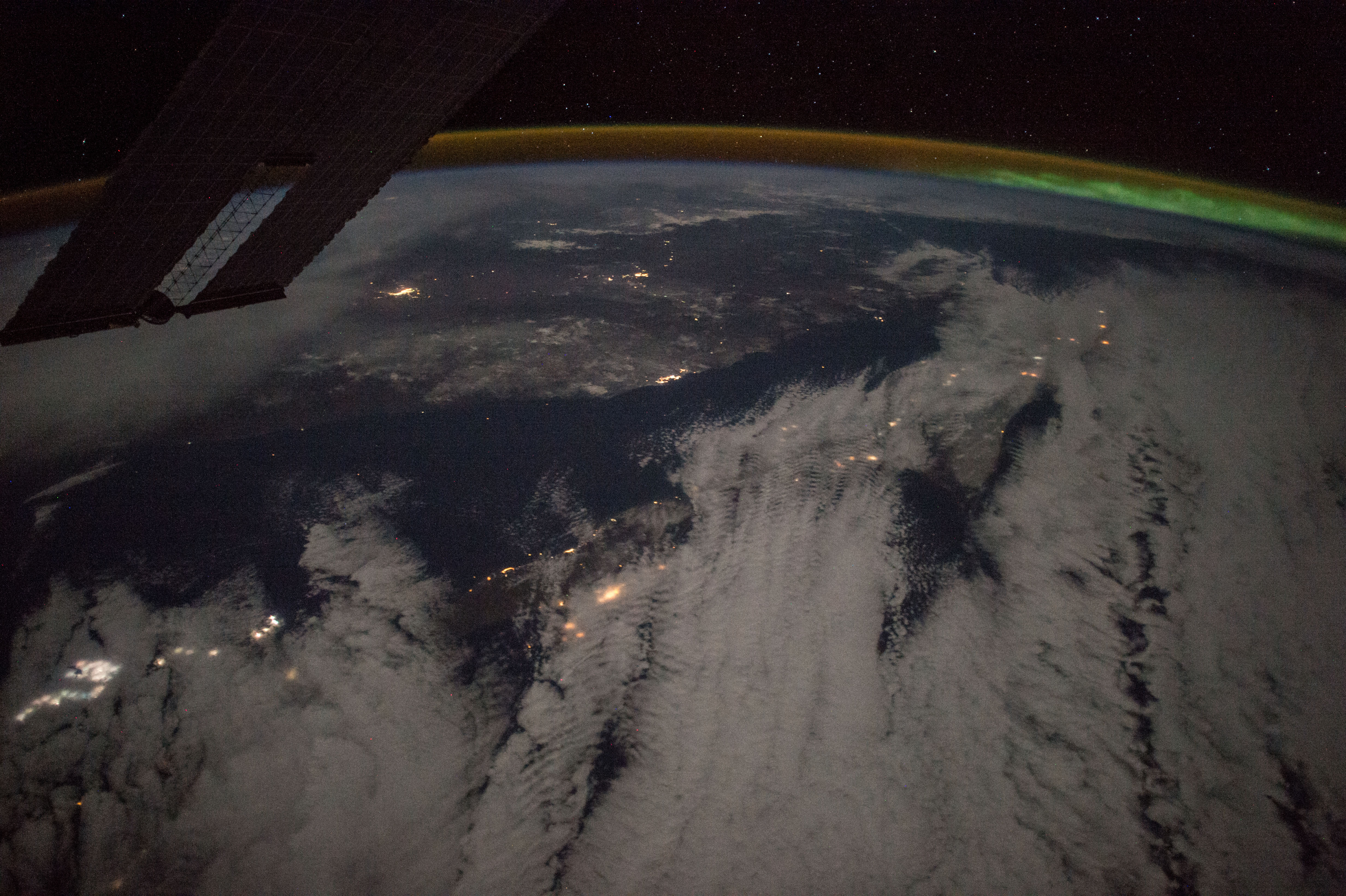
The atmospheric scientist and chemist James Lovelock once proposed a theory called the Gaia hypothesis which suggests that given enough time, the living organisms on Earth and their inorganic surroundings will have eventually evolved together and merged into a self-regulating system that helps to foster and maintain the right condition for life to flourish on Earth. Although much research and thorough tests are still needed to determine the extent of the theory’s adequacy, one cannot deny the fact that there is an unbreakable link between us and the Earth. When you see the line separating day-night from space, moves across Earth’s surface and lights up cities one after another like a match, you become aware that Earth is a system, and we are very much part of that system. We are effectively adapted and tightly tangled to Earth, so much so that when something happens to it, whether for the better or worse, we are also affected just as much.
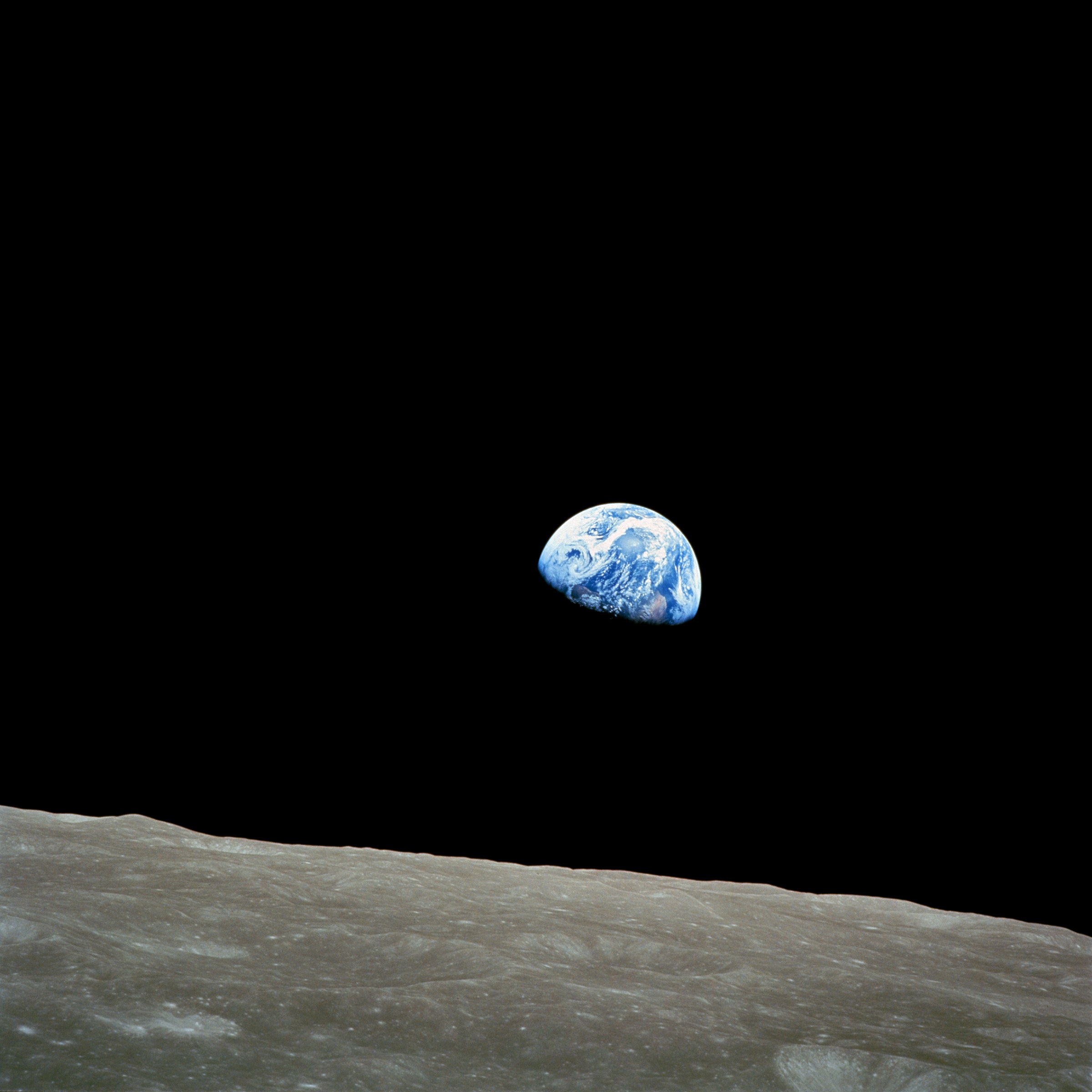
After the Apollo 8 mission to the Moon, the crew member Bill Anders made the statement “We came all this way to explore the Moon, and the most important thing is that we discovered the Earth.”. I have always considered this a powerful statement and a reminder to all of us, especially those who are eager to explore the universe, that while there are so many fascinating things out there to be discovered, when we look up, don’t forget to look back sometimes and appreciate this beautiful planet that we are so privileged to be able to call it home.
An attempt to experience The Overview Effect
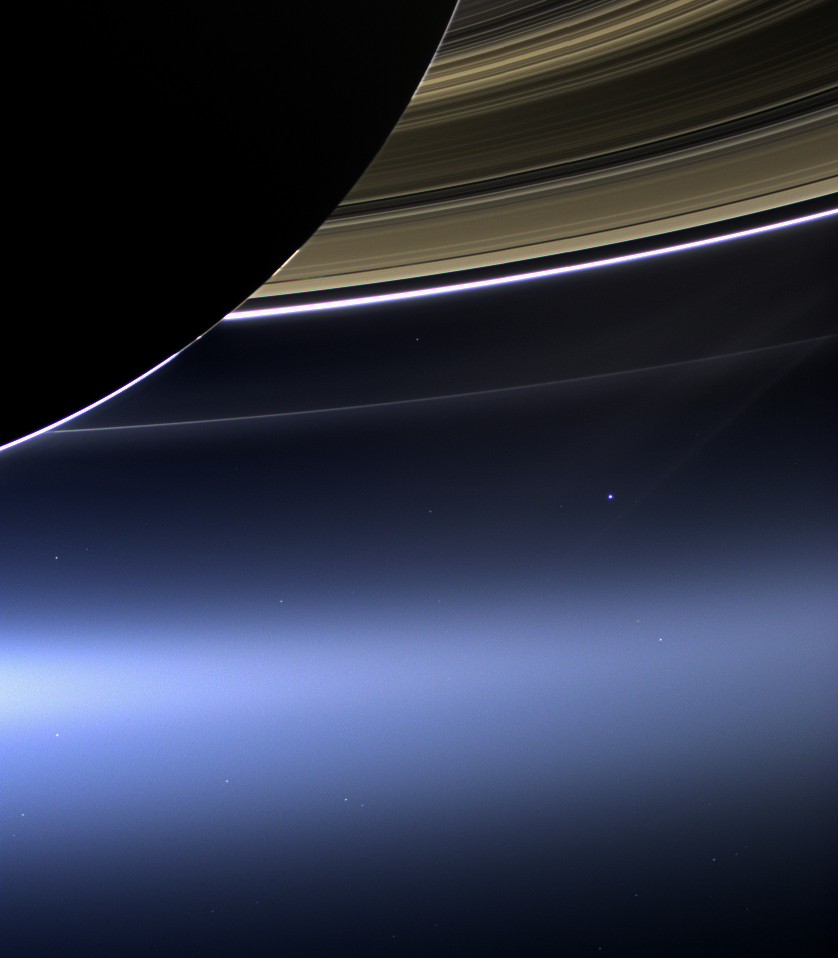
While The Overview Effect is brought about by spaceflight, and I myself have not been blessed with the opportunity to experience it yet, I would like to share a photograph here that might offer a similar trigger for our mindset, even if only slightly, akin to The Overview Effect.
The Figure 4 below is a photograph taken by NASA’s Cassini spacecraft designated for a mission to study the planet Saturn. In this figure, we can see Saturn’s spherical outline and a section of its famous ring, moreover, the Earth is also visible as a bright blue dot located below the ring halfway down and toward the right side of the shot. To me, the compelling part about this photo is the realisation that as far as this view is concerned, everything we know, every person we love and every memory we cherish ALL. EXIST. ON. THIS. TINY. DOT. It makes you wonder: if this is all there is, what can we do to give our seemingly insignificant lives a purpose or a meaning?
 Jimmy Shih


